


Back to the future
The early 20th century was a transitional period for Szentendre. The constantly growing influx of Hungarian speakers from the turn of the century radically changed the social and cultural composition of the town, and then the First World War, the Soviet Republic and the Trianon Peace Treaty caused economic and political instability. The formerly multi-ethnic town, which had been led mainly by Serbs, was looking for new development opportunities during this period. Szentendre was then a small town with a rural atmosphere, with mercantile and
craft traditions, but the processes that began in the 1920s led it towards a different vision.
Mayors coming from outside the town became the dominant figures of the era, with programmes of modernization, infrastructure development and a future based on tourism. Their
ideas were not necessarily widely accepted, and from time to time, politicians campaigned for the status of a nagyközség, an entity between a village and a town. The development potential of the town was influenced by the visions of local and national leaders, its geographical location— the proximity of the Danube, the Pilis Hills and Budapest—the continuous fluctuations of the population and its relationship to the state.
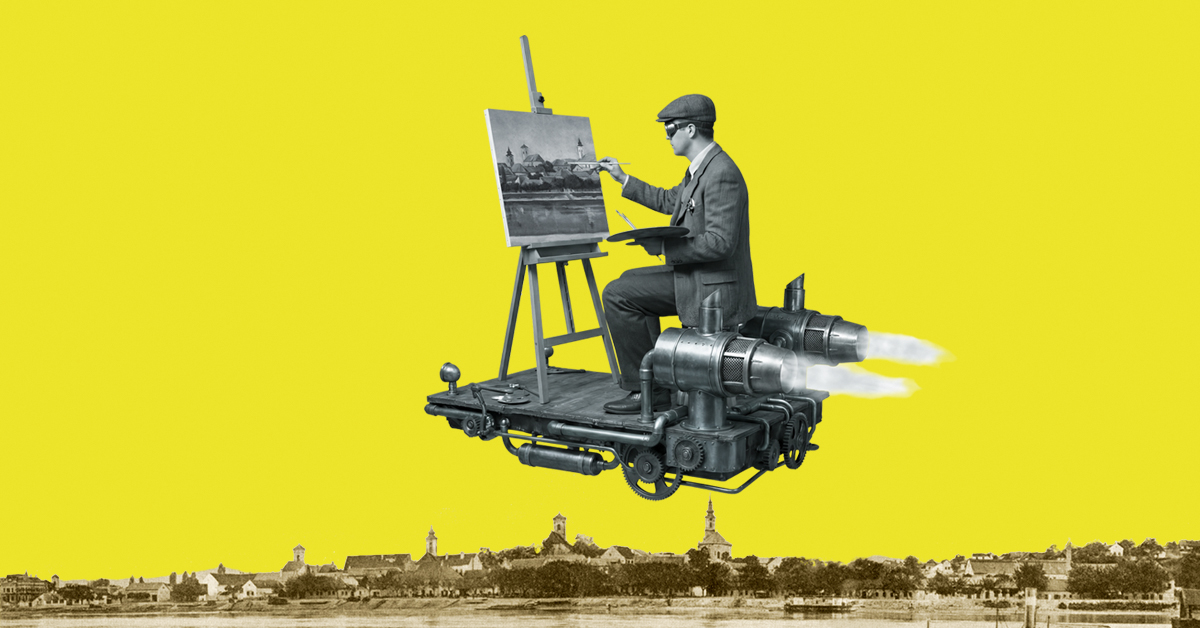
In hindsight, it is evident that taking up the idea of an artist colony in 1926 laid the foundations for an image of the town that was based on the visual arts. Back to the Future is an exhibition that joins the celebration of the 100th anniversary of the establishment of Szentendre’s Artist Colony by remembering some famous and less well-known figures of the host town’s society, the dilemmas the community faced with regard to development, and the trends in its transformation—mostly with the help of historic photographs.